
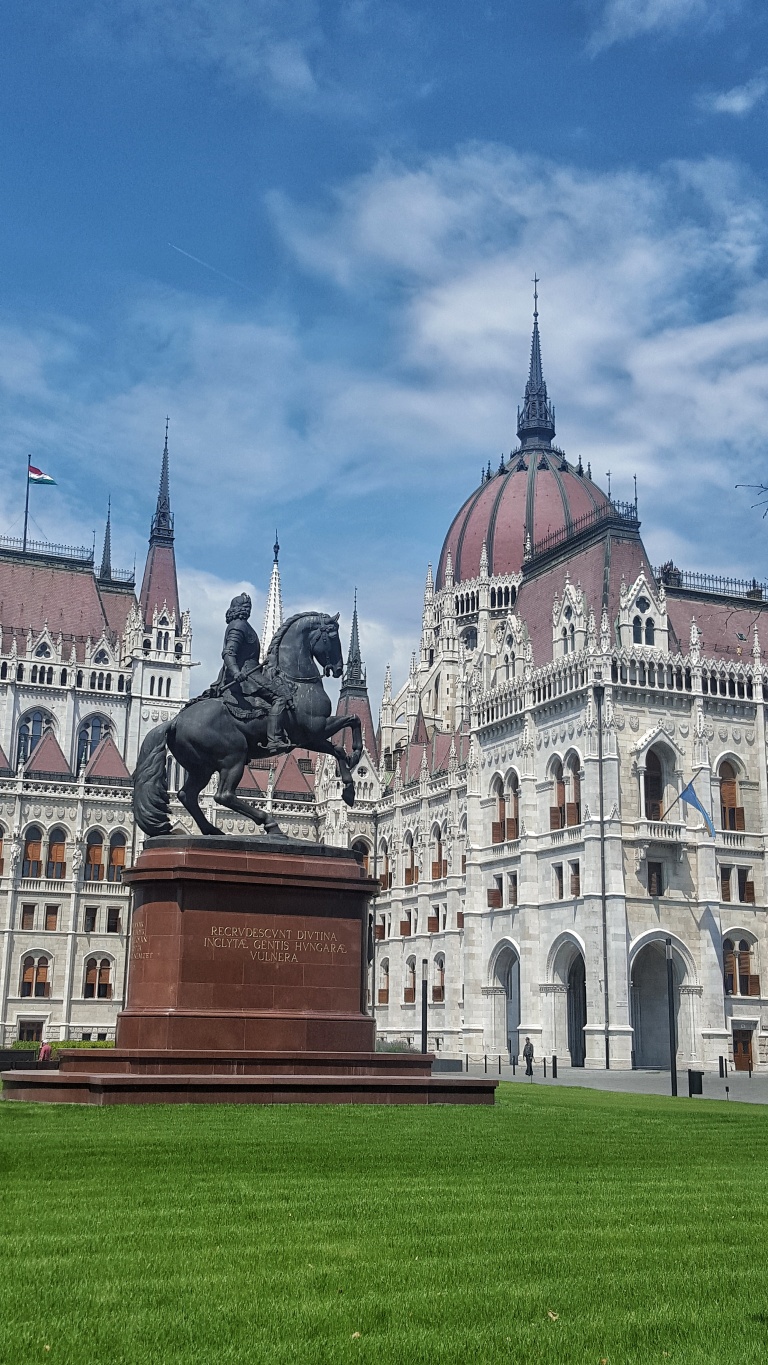
In the heart of Budapest’s Pest district, standing proudly on the banks of the River Danube, is the Hungarian Parliament Building. But as a silent witness to some of the country’s most pivotal political moments over the last century, the buildings beautiful Neo-Gothic exterior shrouds a wealth of history – some of which is not so pretty.
Having not done much sightseeing or been much of a tourist since I’d arrived in the city of Budapest (because I was exhausted after a whirlwind tour of Berlin and felt like I needed a break after smashing my goal of visiting 30 countries before my 30th birthday), on my last full day in Hungary I was determined to go and see something recommended by all my friends.
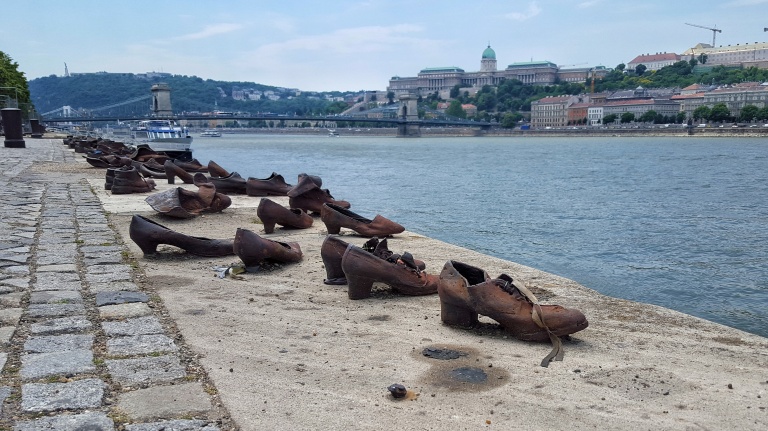
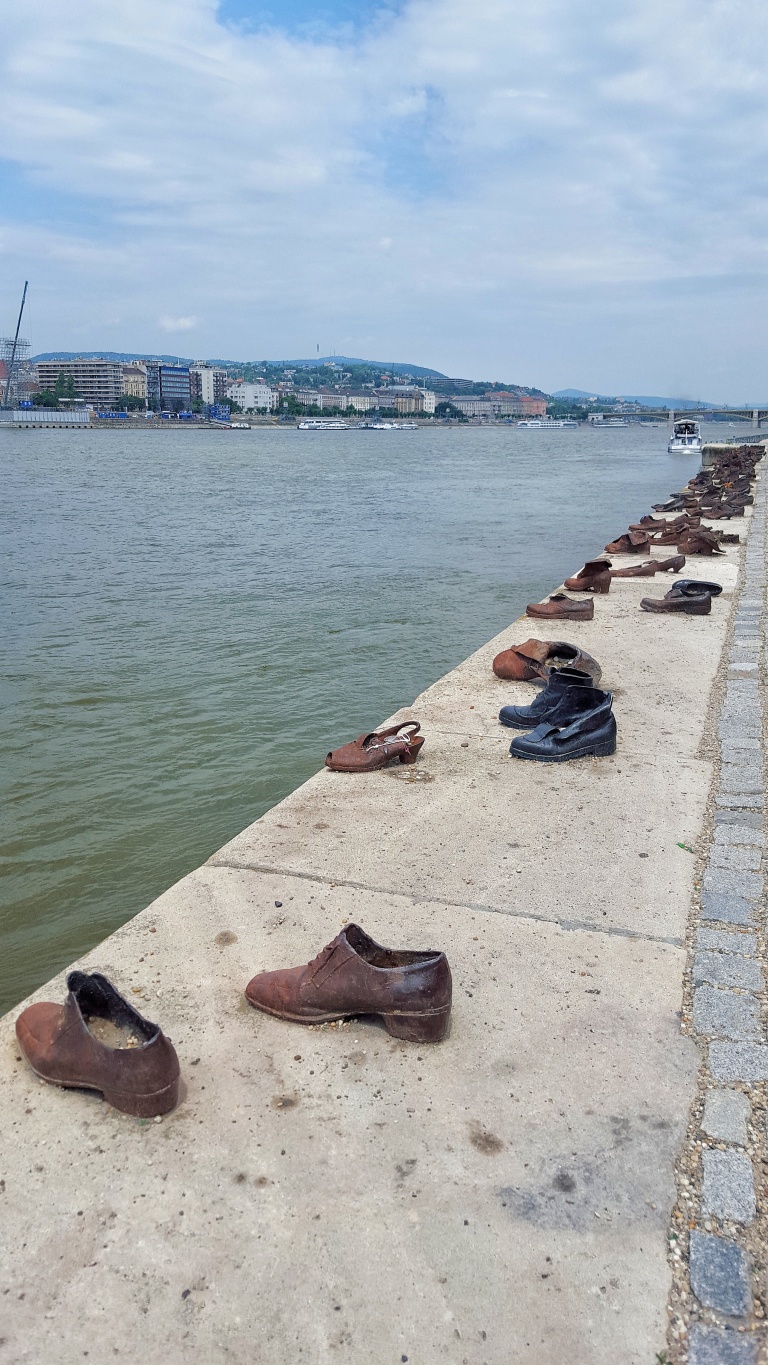
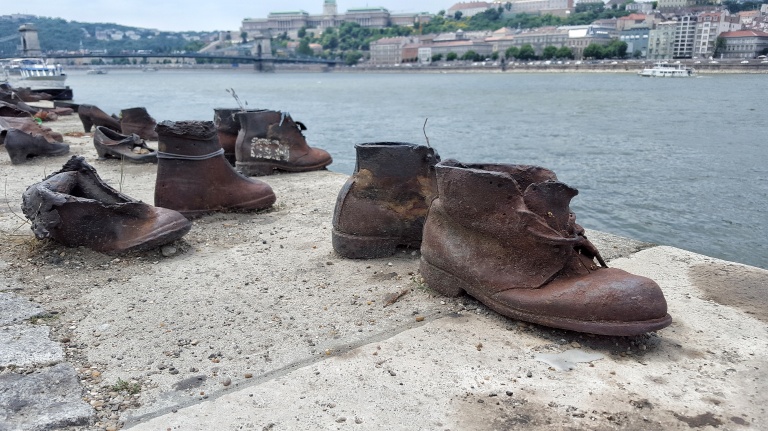
So early that morning I left my hotel in the city centre and set out to find the famous Shoes of the Danube.
The Shoes of the Danube.
The shoes are a memorial to honour the Jews who were killed by fascist Arrow Cross militiamen in Budapest during World War II. Not far from the Hungarian Parliament building, on the bank of the river are sixty pairs of old fashioned women’s, men’s,and children’s cast iron shoes.
Created by Hungarian sculptor Gyula Pauer, the shoes represent the different individual Jews who were murdered, after being asked to remove their shoes and line up along the river bank. They were then shot one-by-one at the edge of the water, so that their bodies fell into the river and were carried away.
Pauer was awarded the Kossuth prize for the poignant tribute.
En route to the poignant holocaust memorial for the murdered Jews though, I unintentionally stumbled upon perhaps the most beautiful building I’d seen in Hungary. Which is really saying something, as over the four days I saw so many amazing buildings feats. From the fairytale Buda Castle and the colourful Matthias Church to the elegant embassy buildings down Andrássy út, Budapest is a like a wet dream for architectural aesthetes.
The Hungarian Parliament Building is in a league of its own, however.
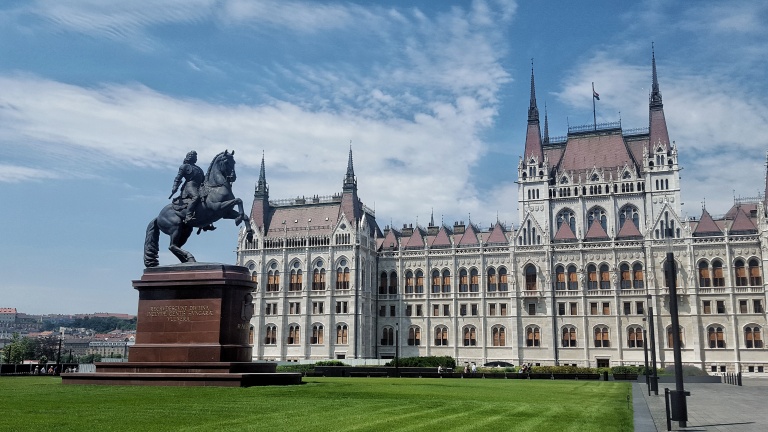
The design of the Hungarian Parliament Building.
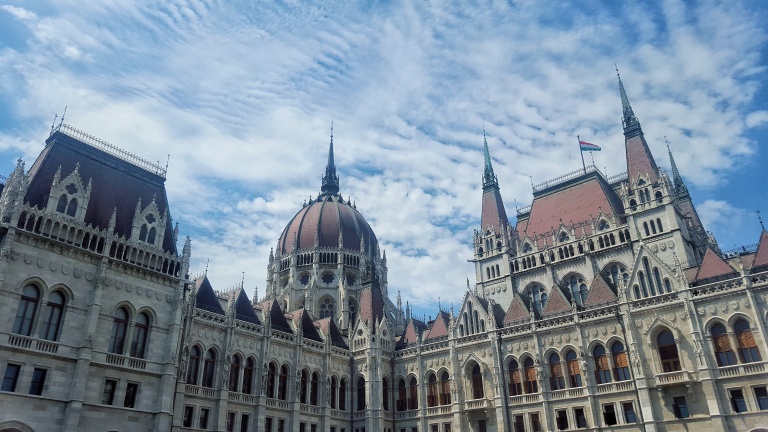
In the 1880’s an open tender was held to find an architect to design a new Hungarian Parliament Building which would represent the nation’s sovereignty. Taking inspiration from London’s Houses of Parliament (which look dated and unimpressive next to this building, in my opinion), the winner was Hungarian architect Imre Steindl who designed the grand Neo-Gothic building which stands today.
Construction of Steindl’s winning plan began in 1885, and the building was inaugurated on the 1,000th anniversary of Hungary in 1896. Fully completed in 1902 when the first sessions took place, the construction took 17 years from start to finish. Sadly Steindl never got to see the building in all its glory, as he went blind before his grand design was completed. He then died a little later that year.
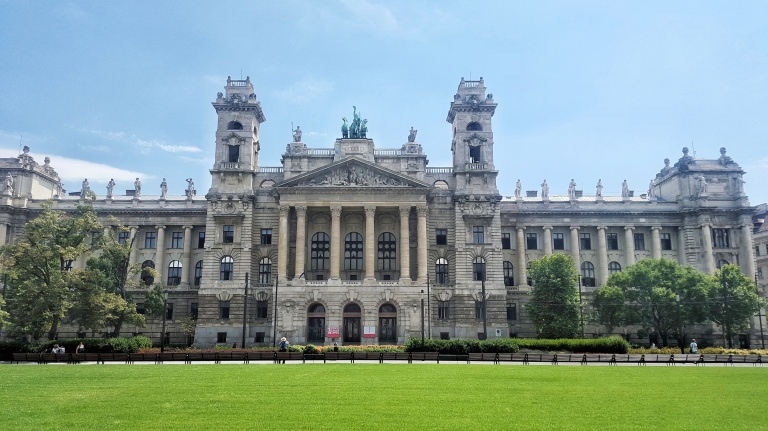
Interestingly, both runner-up designs for the contest back in the 1880’s were also built, facing the Parliament building. One is now the Museum of Ethnography and the other is the Ministry of Agriculture.
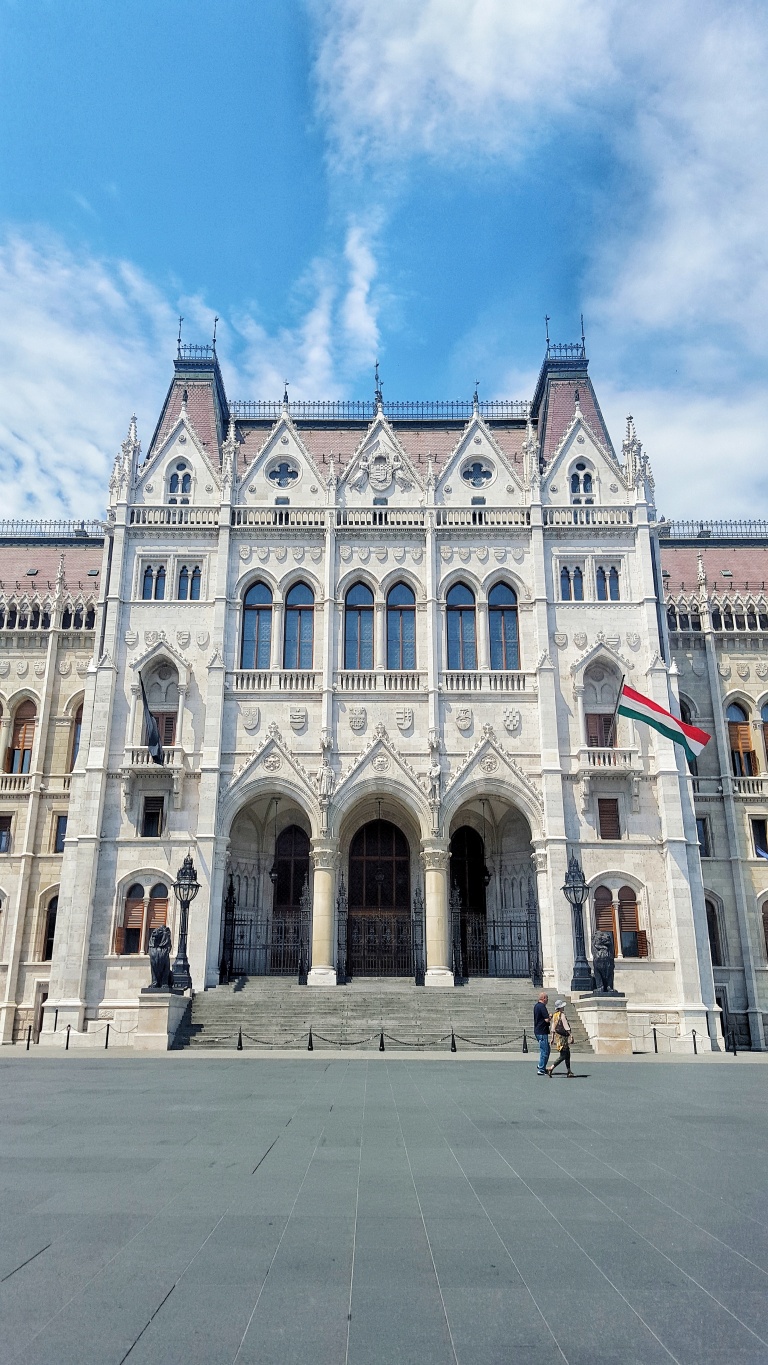
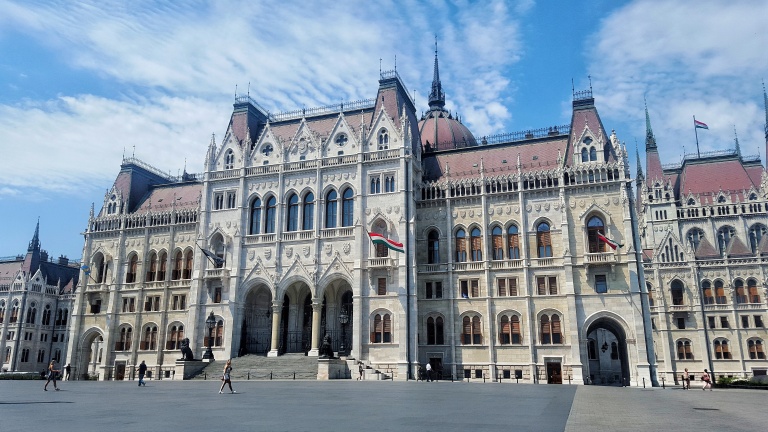
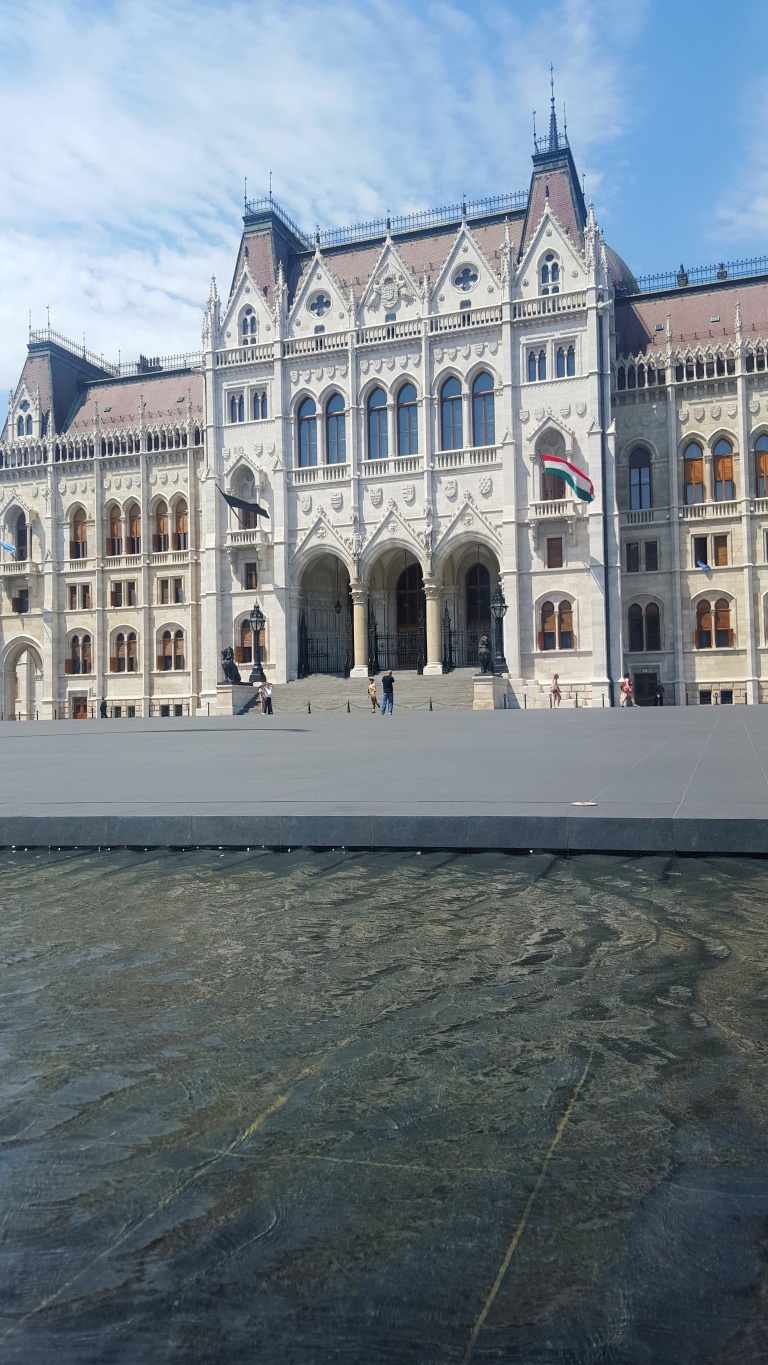
At 268m (879ft) long, 123m (75.4ft) wide and 96m (314.9ft) tall, the Hungarian Parliament is the country’s largest building, Budapest’s tallest, and the third largest parliament building in the world. Quite an accolade for such a small city.
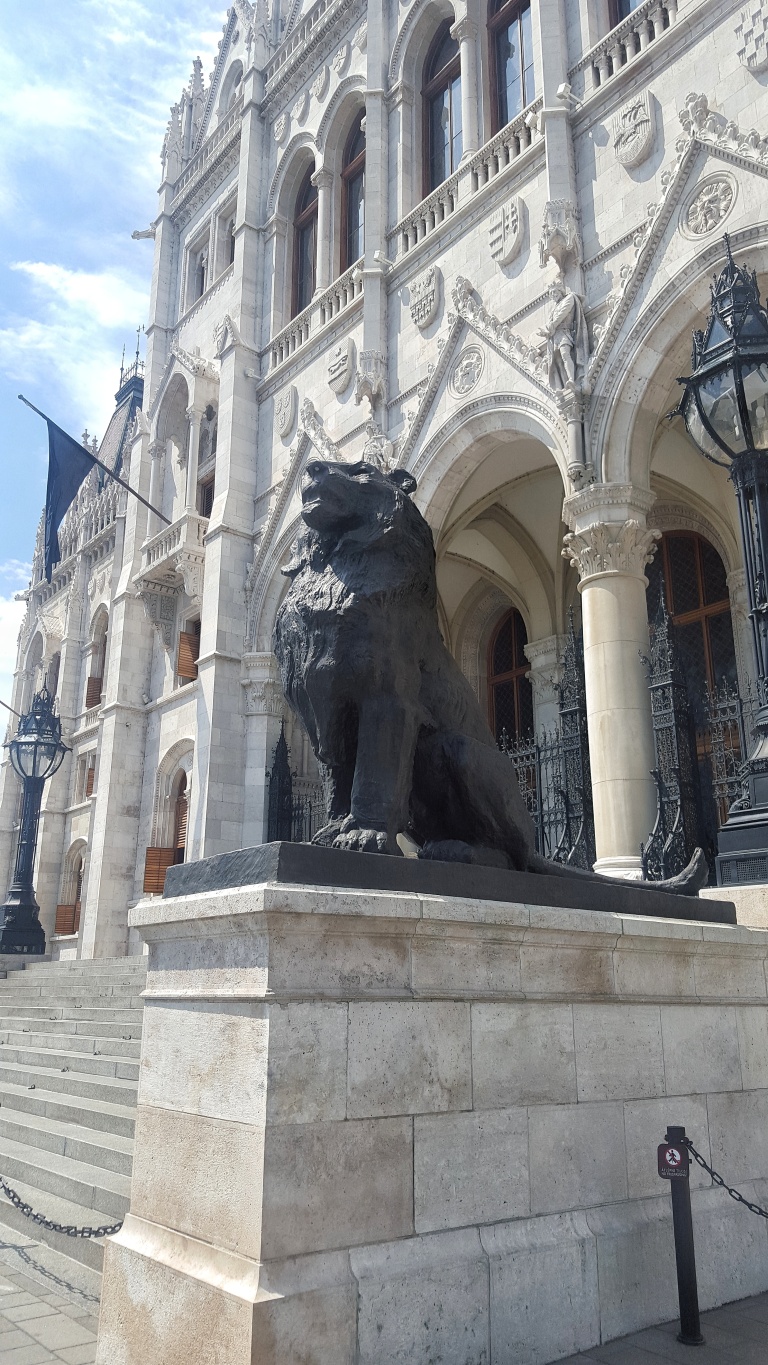
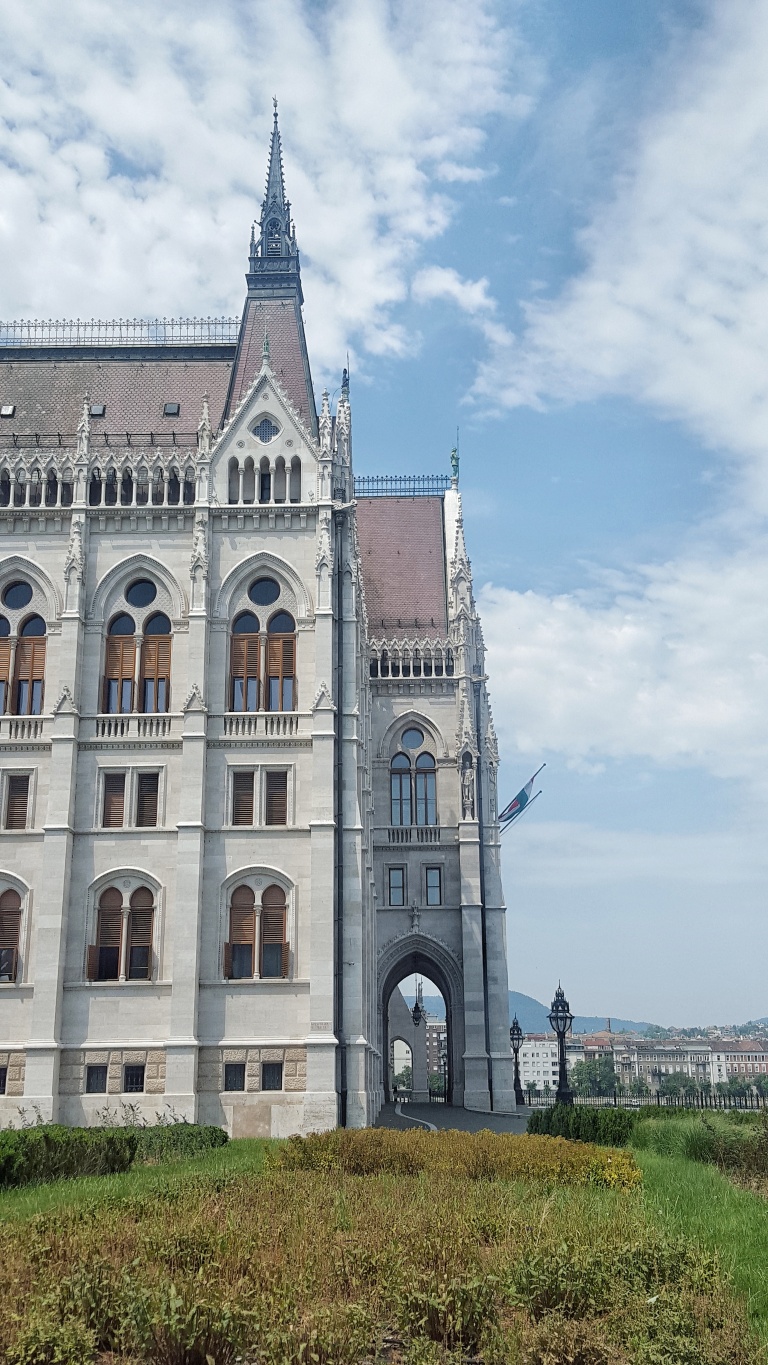
The Parliament building is an amazing example of Neo-Gothic architecture, though there are some characteristics from the Renaissance and Baroque periods too – such as the revival style dome.
It is just over 100 years old, but is clean and the grounds are well kept. Air pollution and the extensive level of detailing on the exterior of the building mean the porous limestone walls are regularly under repair. Though thankfully there wasn’t any scaffolding erected to spoil my pictures.
What’s inside the Hungarian Parliament Building?
Though I didn’t take a tour of the building (they are available, so Google and book one ahead if you fancy it), inside the grand walls and high domes of the Hungarian Parliament, there are 691 rooms, 10 courtyards and 12.5 miles worth of stairs. Can you hear the heart palpitations of those architecture aficionados?
The guided tours allow you to explore the Main Staircase, the Old Upper House Hall and the Lounge, as well as see the Hungarian Crown Jewels, which have been were lost and stolen numerous times.
After World War II, they were transported to Western Europe and eventually given to the American Army for safekeeping from the Soviet Union. For much of the Cold War, the Crown Jewels were held at the United States Bullion Depository (Fort Knox, Kentucky) alongside the bulk of America’s gold reserves. They were eventually returned to Hungary under the presidency of Jimmy Carter in 1978.
The grounds surrounding the Hungarian Parliament.
The impressive Hungarian Parliament Building has stood through two World Wars, a number of uprisings and revolutions and a shifting urban landscape.
The square where the Hungarian Parliament stands is named after Lajos Kossuth, a Hungarian lawyer and regent-president of the country during the 1848–49 revolution. He was widely honored during his lifetime, including in the United States, as a freedom fighter and a bellwether of democracy in Europe. His memorial, as well as a memorial for the 1956 Hungarian Revolution can be seen in front of the Parliament building.
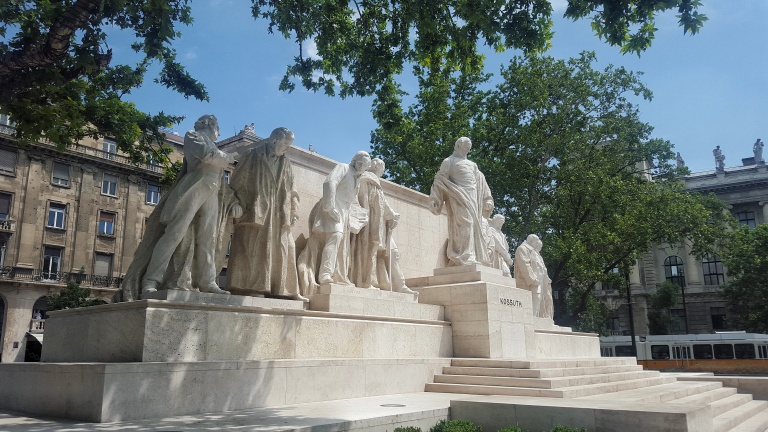
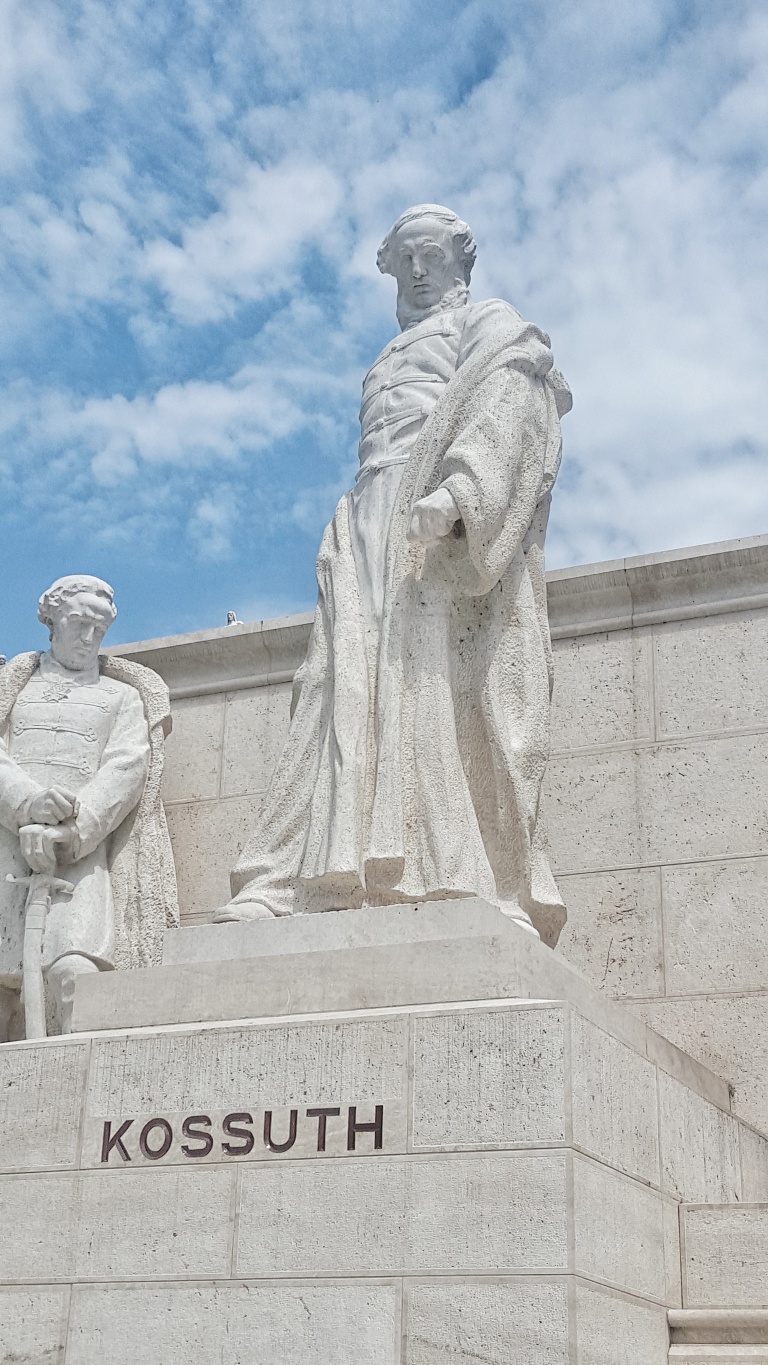
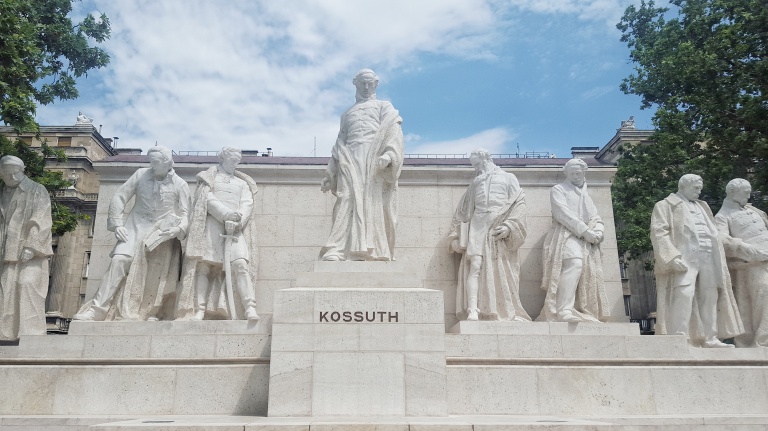
According to my Budapest guidebook, during the Communist era a large red star was added to the central tower above the dome of the building, but after its downfall, the star was removed.
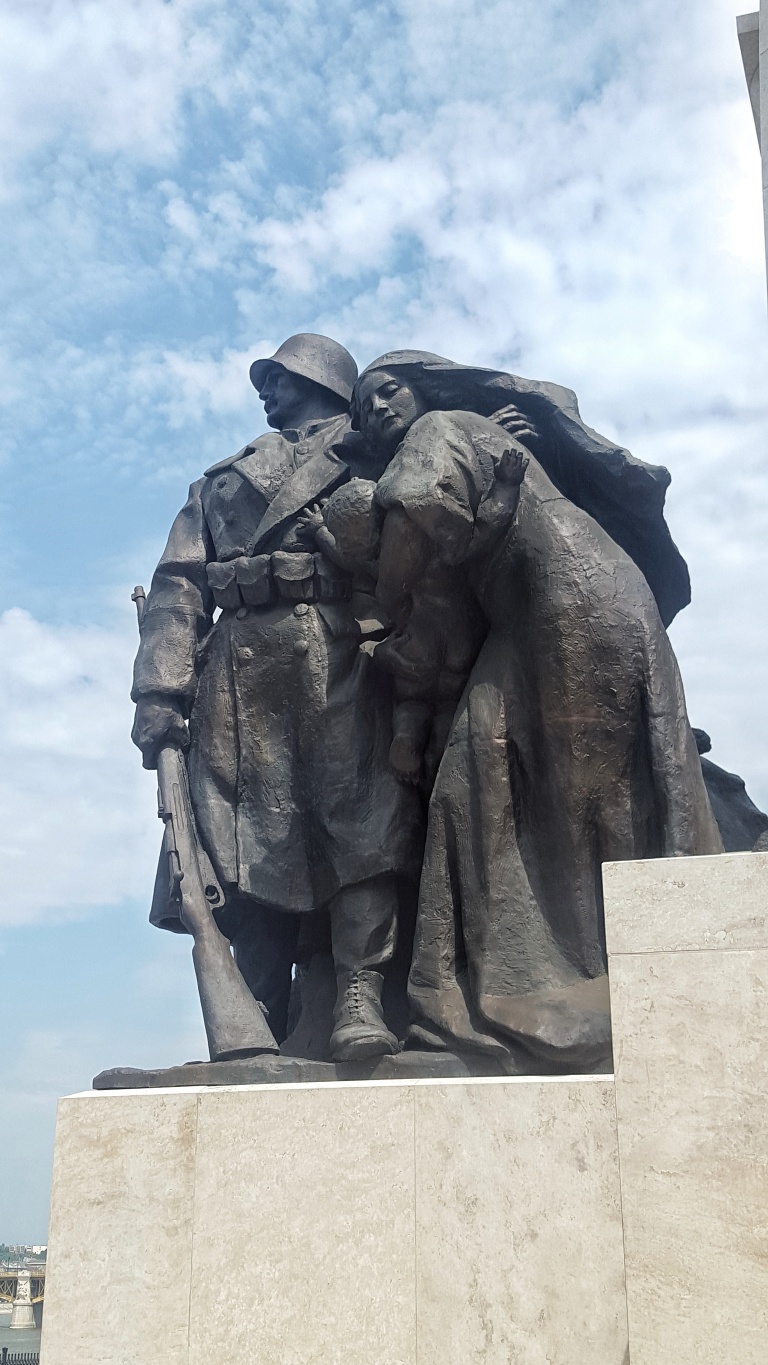
As well as shadowing the Jews murdered by the Danube River in World War II, the Hungarian Parliament Building also witnessed the tragic events of 1956 when, during an uprising on 25 October, against the ruling of the Communist regime, protestors gathered in front of the Parliament. While little is known about the circumstances, shots were fired resulting in the deaths of many.
A memorial to this event stands in the square today.
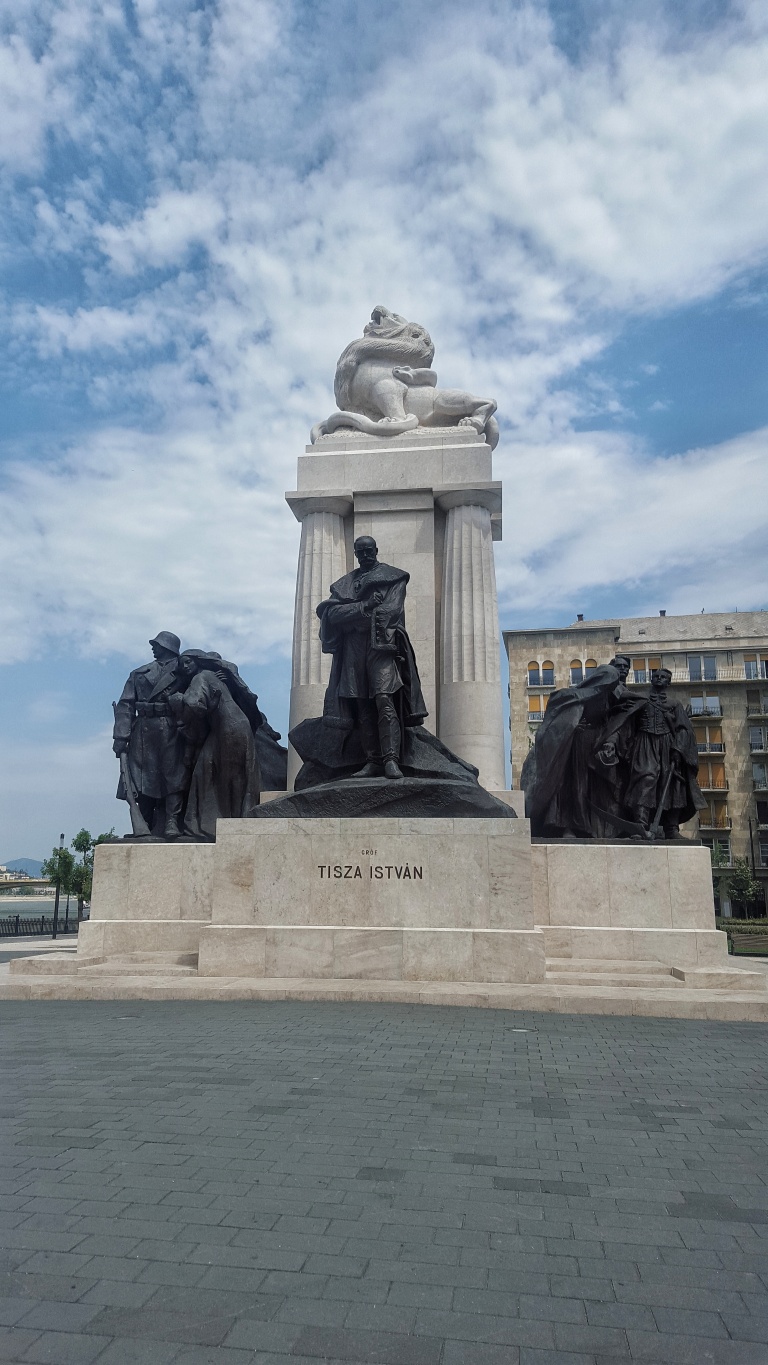
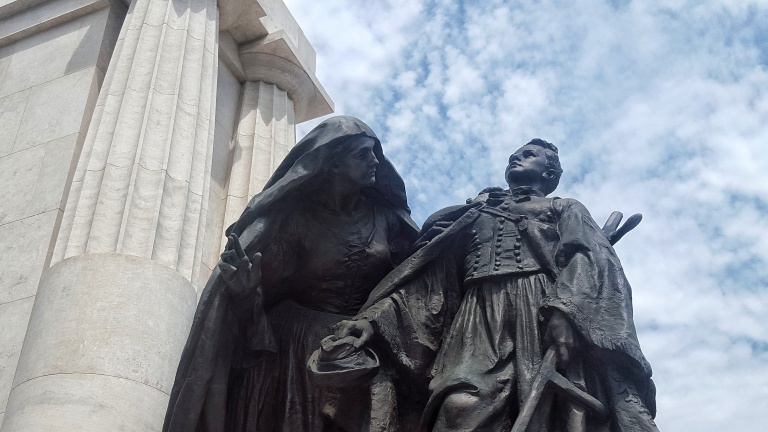
Also, during World War II all of Budapest’s bridges were destroyed and as a temporary solution a bridge was built between Kossuth Square and Batthyány Square. The bridge, named after Lajos Kossuth, was in use until 1960. A memorial next to the Parliament building marks the site on the Pest side.
How to get to the Hungarian Parliament Building.
Getting there is so easy. Just take the Subway (M2) to Kossuth tér, or Streetcar 2, which runs along the Pest riverfront and has a stop at Kossuth tér. You can then walk from there to The Shoes on the Danube river bank too.
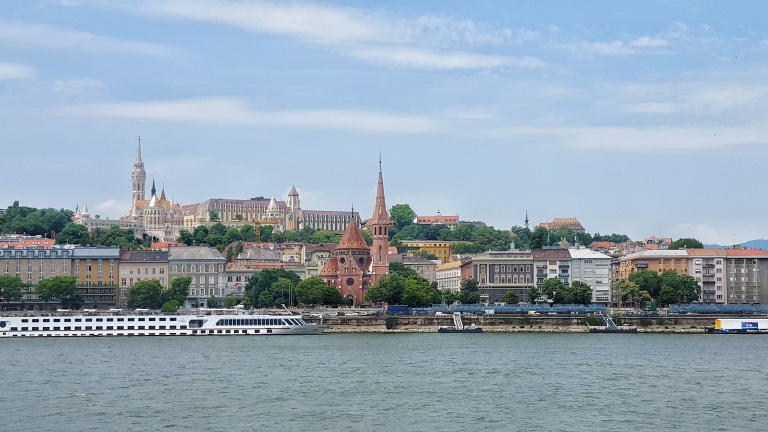
Looking at the Parliament from a distance makes it easier to take in the beauty and harmony of the building. But from the Parliament you’ll get the most spectacular views across the river to the Budapest Terrace, where I celebrated Hungary as 30th country.
 Always Carry On.